
The pharmaceutical industry stands at a defining crossroads as we approach January 2026. For professionals dedicated to patient safety and regulatory compliance, the upcoming Global Pharmacovigilance and Risk Management Strategies Conference is not merely an event; it is a critical barometer for the future of our field. Taking place from January 26–28 in North Bethesda, Maryland, this gathering arrives at a moment when the integration of artificial intelligence and global regulatory harmonization is no longer theoretical—it is operational.
As a seasoned analyst in this sector, I view the Global Pharmacovigilance and Risk Management Strategies Conference as the primary venue where the “playbook” for the next decade will be written. We are moving beyond simple adverse event reporting into an era of predictive safety and proactive risk minimization. This transition requires a fundamental retooling of our strategies, a challenge that this conference addresses head-on.
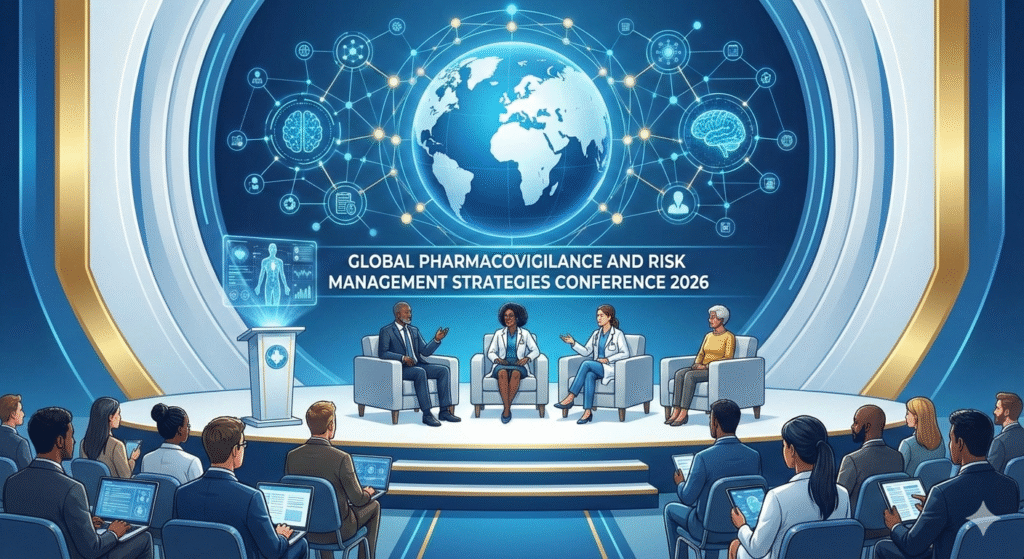
Why This Year is Different: A Convergence of Innovation and Regulation
The 2026 edition of the Global Pharmacovigilance and Risk Management Strategies Conference is distinguished by its intense focus on the practical application of emerging technologies. Previous years have speculated on the potential of AI; this year, the agenda demands evidence of its utility. Attendees will witness a shift from “what if” to “how to,” specifically regarding:
- AI-Driven Signal Detection: Moving beyond pilot programs to scalable, validated systems that can handle massive datasets.
- Global Harmonization: Navigating the complexities of conflicting regulatory requirements across the FDA, EMA, and PMDA.
- Resource Optimization: Doing more with less by automating routine case processing while enhancing quality oversight.
This focus makes the Global Pharmacovigilance and Risk Management Strategies Conference essential for organizations striving to maintain inspection readiness while managing ballooning data volumes. The pressure to innovate without compromising safety standards has never been higher, and this forum provides the collaborative space needed to solve these systemic tensions.
Agenda Highlights: Sessions That Will Shape Policy
The program for the Global Pharmacovigilance and Risk Management Strategies Conference is robust, featuring a lineup of sessions designed to challenge conventional thinking. The organizers have curated a mix of high-level strategy and “in-the-trenches” operational tactics.
Key sessions that demand attention include:
- Fireside Chat with Dr. Robert Califf: As FDA Commissioner, his insights on post-market safety and regulatory flexibility will likely set the tone for US policy for the remainder of the decade.
- The Safety Pulse: This executive session gathers Global Chief Safety Officers to discuss how they are structuring their organizations to survive the “data deluge” and evolving compliance landscapes.
- Harnessing AI and Emerging Tech: A deep dive into the specific tools transforming pharmacovigilance (PV) operations, moving past the hype to discuss validation and audit trails.
- Real-World Evidence (RWE) Solutions: Addressing the challenge of “big data feeling small” by finding practical ways to utilize RWE for safety signal confirmation and label updates.
These sessions at the Global Pharmacovigilance and Risk Management Strategies Conference are structured to provide actionable takeaways. Whether you are a localized safety officer or a global head of risk management, the diversity of topics ensures that every attendee leaves with a clearer roadmap for their specific challenges.
Notable Speakers Leading the Charge
The credibility of the Global Pharmacovigilance and Risk Management Strategies Conference rests on its faculty. This year’s roster represents a blend of regulatory authority and industry innovation, ensuring a balanced perspective on risk management.
Watch for insights from these industry leaders:
- Dr. Robert Califf (FDA): Bringing the regulator’s view on the future of drug safety monitoring and public health protection.
- Mariette Boerstoel-Streefland (Bristol Myers Squibb): A veteran voice on patient safety, offering strategies for integrating patient perspectives into corporate safety culture.
- Scott Janiczak (FDA): Providing the critical “on-the-ground” regulatory perspective from the Division of Pharmacovigilance.
- Mark Perrott (Axian Consulting): focusing on the communication aspect of risk management and how to effectively convey benefit-risk profiles to stakeholders.
Their presence at the Global Pharmacovigilance and Risk Management Strategies Conference guarantees that discussions will be grounded in the reality of current regulatory expectations, rather than abstract theory.
The Shift Toward Patient-Centric Risk Management
One of the most profound themes emerging at the Global Pharmacovigilance and Risk Management Strategies Conference is the pivot toward patient-centricity. Historically, pharmacovigilance has been a backend function, invisible to the patient. That is changing.
The conference will explore:
- Modernizing REMS: transitioning from burdensome administrative programs to integrated, digital-first safety tools that minimize friction for patients and providers.
- Patient Voice in Signal Detection: Utilizing social listening and patient-reported outcomes to identify safety signals earlier than traditional reporting methods allow.
- Transparent Communication: evolving how we communicate risks to ensuring patients are partners in their own safety decisions.
By attending the Global Pharmacovigilance and Risk Management Strategies Conference, professionals can learn how to operationalize these concepts. It is no longer enough to just monitor safety; we must actively engage with the populations we serve to ensure our risk minimization strategies are effective in the real world.
Strategic Implications for Global Health Policy
The discussions held at the Global Pharmacovigilance and Risk Management Strategies Conference will ripple outward, influencing global health policies far beyond the walls of the conference center. As regulators and industry agree on new standards for AI validation and RWE usage, we will see a shift in inspection focus.
We can anticipate:
- Stricter standards for algorithm oversight: Regulators will expect clear governance on how AI is used in safety decisions.
- Increased reliance on post-market data: As clinical trials become faster, the burden of proof for long-term safety will shift heavily to the post-market phase.
- Global alignment on risk minimization: A push to standardize how risks are communicated across borders to prevent patient confusion.
The Global Pharmacovigilance and Risk Management Strategies Conference acts as the incubator for these policy shifts. Being present allows your organization to anticipate these changes rather than reacting to them after new guidance is issued.
Maximizing Your Attendance: A Call to Action
To truly benefit from the Global Pharmacovigilance and Risk Management Strategies Conference, attendees must go beyond passive listening. The value lies in the “spaces between” the sessions—the networking breaks, the roundtable discussions, and the Q&A periods.
I recommend the following approach:
- Prepare your questions for the regulators: Use the neutral forum of the conference to ask the hard questions about gray areas in compliance.
- Benchmark your AI strategy: Compare your internal roadmaps against the case studies presented to identify gaps or over-investments.
- Connect with patient advocates: innovative risk management requires understanding the patient journey; use this time to build those bridges.
The Global Pharmacovigilance and Risk Management Strategies Conference is the premier event for our sector. It offers a rare opportunity to calibrate your strategies against the best in the world. In an industry where patient safety is paramount, missing this convergence of minds is a risk in itself.
Conclusion
As we look toward 2026, the Global Pharmacovigilance and Risk Management Strategies Conference remains the essential anchor for the drug safety community. It is where the future of pharmacovigilance is not just discussed, but decided.
By engaging with the content and community at the Global Pharmacovigilance and Risk Management Strategies Conference, you ensure that your organization remains at the forefront of patient protection and regulatory compliance.